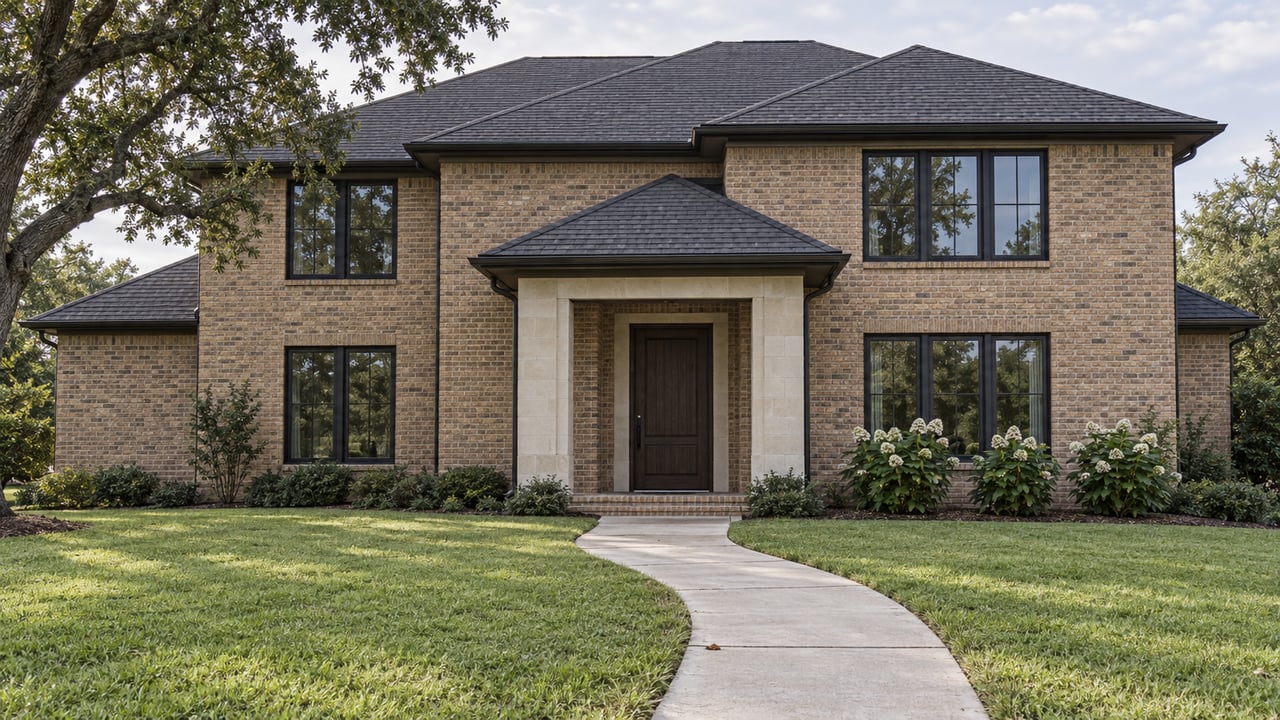
Longwood Village was established in 1995 and has more than 1,500 homes. After three decades, the houses on any one street can have very different roofs. One might be original, one replaced after a storm, and another redone last spring in a different shingle. The listing gives you the year the house was built. The insurance quote tells you how the roof will be covered, and for a buyer in Longwood Village this fall, the coverage terms are the bigger number.
Two things changed at the state level in the last month. Neither one shows up in a listing.
What Texas clarified on September 29
On September 29, 2026, the Texas Department of Insurance said it is clarifying its rule that insurance companies can't decline or nonrenew a home policy based on the age of a house or its roof. The same release says insurers can still base decisions on the physical condition of the home and its parts, including roofing, wiring, heating and air conditioning, plumbing, and siding.
Insurance Commissioner Amanda Crawford said in the TDI announcement that "Texans deserve fair access to home insurance, no matter the age of their home." The agency describes this as clarifying an existing rule. The amended text is still a formal proposal, with a public hearing set for November 3, 2026 and comments due November 9, 2026. If you're reading this before those dates, the amendments haven't been adopted yet.
For a Longwood Village buyer, this matters more than it might seem. A 30-year-old house shouldn't be turned away just for being 30 years old. Condition is still fair game, though, and the coverage terms a policy attaches to an older roof are a separate question from whether you can get a policy at all.
Age alone can't block a policy. Condition and coverage terms still can.
TDI's own roof guidance says some policies pay the full cost to repair a roof at current prices, which is called replacement cost coverage. Others pay less when the roof is older or worn, which is called actual cash value. As roofs age, some companies switch to actual cash value at renewal. If a roof is in poor condition, the company may not cover it at all.
TDI's worked example shows how wide the gap gets. It uses a $10,000 roof replacement and a $4,000 deductible:
| Roof age in TDI's example | What the policy pays |
|---|---|
| Any age, replacement cost coverage | $6,000 |
| 5 years, actual cash value | $4,500 |
| 10 years, actual cash value | $3,000 |
| 20 years, actual cash value | $0 |
On the 20-year roof, the policy is in force and pays nothing toward a replacement. A rule against age-based denials leaves that outcome untouched, because an older roof can be insurable and still be worth very little on paper.
The deductible raises the stakes. TDI notes that wind and hail deductibles are often higher than other deductibles. When that deductible is a percentage of dwelling coverage, the dollar amount can be large. In TDI's deductible illustration, 5% of a $150,000 insured home is $7,500, which is more than the $6,500 roof repair in the same example. Insured values on Longwood Village homes will vary, but the math is the same at any value. The percentage applies to dwelling coverage, so the deductible grows as coverage grows.
So two houses on the same street, with the same list price and the same inspection report, can carry very different storm exposure. The difference comes down to roof age and the policy language around it.
Why this fall is a good time to compare quotes
The second change came in October. As of an October 9, 2026 report in Insurance Journal, Texas insurers had filed an average 4.3% decrease on homeowners rates since the start of July. ASI Lloyds, a Progressive company, filed a 6% decrease affecting 71,000 policyholders. Texas Farm Bureau Mutual filed a 5.2% decrease affecting 133,000. Insurance Journal quoted Commissioner Crawford encouraging Texans to "shop around, and make sure they're getting the best value for their coverage."
TDI's consumer guide adds that underwriting rules vary by company, and that a home's age and condition can affect premiums. Put that next to rates that are coming down, and quotes on the same Longwood Village house can differ in price and in how each carrier handles the roof. TDI's rate filing search lets anyone look up an insurer and see its filed percentage changes and effective dates.
The quote is the first document in the deal that puts a price on the roof, and this fall there are more carriers worth asking.
When the quote fits into a Texas contract
Most buyers order insurance near the end, after inspection and appraisal. With an older roof, that order can backfire. Here is a sequence that keeps the roof question inside the window where a buyer still has room to act:
- Before writing the offer, ask the listing side for the roof's installation year and material. TDI suggests confirming roof age and material and asking how much a roof claim would pay.
- In the first days of the option period, ask for quotes that spell out roof coverage: replacement cost or actual cash value, plus the wind and hail deductible as a dollar figure, not only a percentage.
- When the inspection report comes in, compare its notes on the roof's condition with how each carrier plans to cover it. TDI says insurers inspect roofs when someone applies for coverage, so a carrier may reach its own conclusion.
- Before the option period ends, take any roof-related request to the seller with the quote in hand, not just the inspection.
A quote showing actual cash value on a 20-year-old roof is the kind of concrete evidence that holds up in a negotiation.
If the seller, or you, reroofs first
The HOA becomes part of this the moment someone talks about replacing a roof before or after closing. Longwood Village HOA's architectural page says any roof replacement that is not done in the same or equivalent materials, style and color requires approval from the Architectural Review Committee. A request has to include material samples or a brochure along with the application. Approval has to be in writing before work starts, and the process can take up to 60 days. Applications have moved to TownSq, and the HOA has dropped its $25 application fee.
That 60 days is longer than a typical option period, which affects any deal where a roof upgrade is part of the negotiation. A like-for-like replacement can move quickly. A change in material, including an upgrade, goes into the ARC queue.
State law sets some limits on HOA roofing rules. Texas Property Code Section 202.011 covers shingles designed mainly for wind and hail resistance, better heating and cooling efficiency, or solar generation. It bars HOAs from prohibiting or restricting those shingles when the statute's conditions are met, including that the installed shingles resemble those used or allowed in the subdivision, are more durable and equal or better in quality, and match the look of the surrounding homes. The statute's full text spells out those conditions, and the HOA's review process still applies.
The insurance side ties back in here. TDI says impact-tested roofing can qualify for discounts. UL impact classes run from 1 to 4, and Class 4 gets the highest credit, but each insurer sets its own discount amount and documentation requirements. TDI's PC068 form has the installer certify the roof's rating under UL Standard 2218. On September 16, 2026, TDI's Commissioner's Bulletin B-0008-26 encouraged insurers to develop "meaningful, actuarially supported premium discounts" for loss mitigation, naming impact-resistant roofing specifically. The bulletin encourages discounts. It doesn't require them, so whether a Class 4 roof lowers the premium depends on the carrier.
For a seller who already put on an impact-rated roof, the installer's paperwork is worth having ready for buyers. For a buyer looking at a house with an older roof, the quote will show how much a replacement could change the premium with that carrier.
Quick answers
Can an insurer refuse a Longwood Village home because it was built in the 1990s? TDI's September 29, 2026 clarification says companies can't decline or nonrenew a policy simply because the house or its components are older. They can still consider physical condition.
Does a new roof need HOA approval? Only if it isn't the same or equivalent material, style and color, according to the HOA's architectural page.
Will an impact-resistant roof lower my premium? It may. TDI says each insurer sets its own credit.
This post is general information, not legal, insurance or financial advice. Your policy terms, deductible, HOA approval and how any statute applies to your home depend on your situation, so confirm them with a licensed insurance agent, a real estate attorney, the TDI Help Line at 800-252-3439, and the Longwood Village HOA.
If you're looking at a Longwood Village home and the roof is the big unknown, let's put the quote and the inspection side by side early, while there's still time to negotiate over what they show. Brianna Bischoff can help you plan your option period around the roof. Let's Connect.
