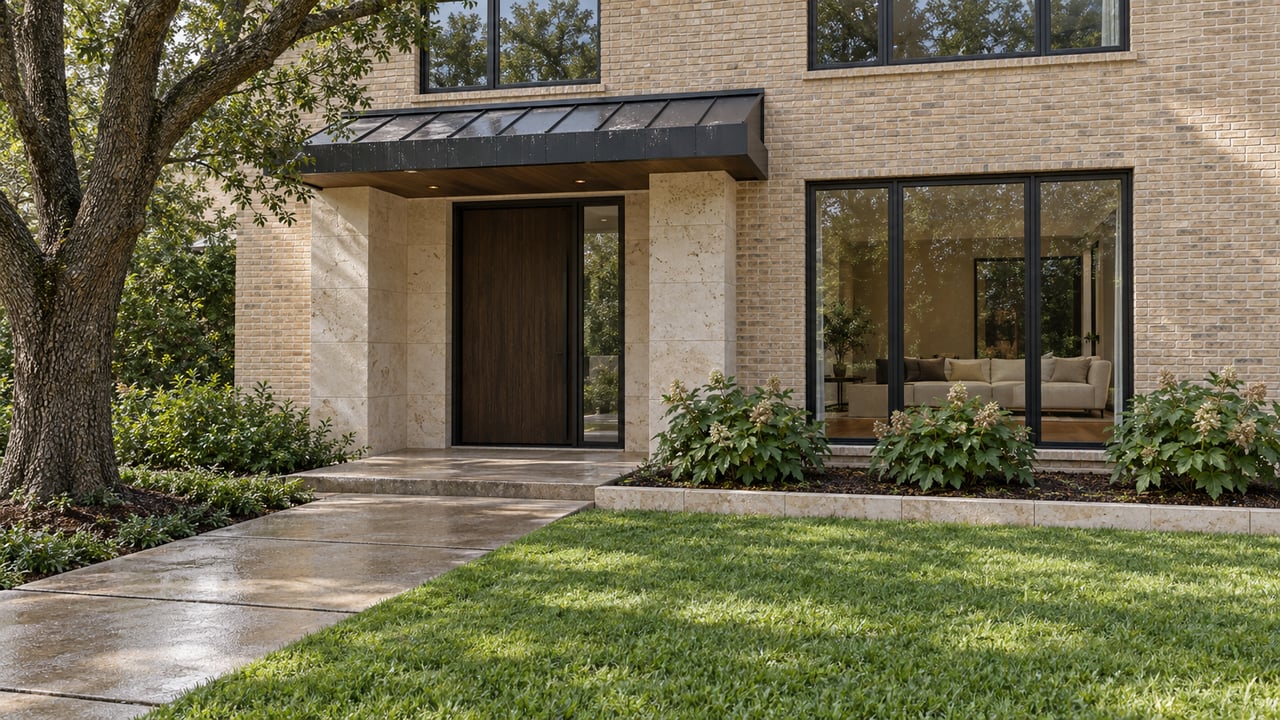
A two-story Perry Homes inventory house at 12415 Beacon Bend Way in Bridgeland Central is listed at $474,900, ready for an October move-in. It's part of the builder's Year End Sales Event, and the flyer promises "up to $55,000 in incentives" and a 4.99% rate. Freddie Mac's weekly survey had the average 30-year fixed rate at 7.40% as of October 8. Put those side by side and the resale houses ten minutes up the road in Longwood Village look like they cost more to finance.
Read the fine print and that gap narrows considerably. The loan rules that cap what Perry can put toward a buyer's financing are the same rules that cap what a Longwood Village homeowner can offer. The builder isn't using a special tool. It's using one most resale sellers haven't been asked to use yet.
What the 4.99% Actually Is
Perry's own disclosures say the 4.99% rate, at 5.898% APR, is the starting rate on a conventional 30-year 7/6 adjustable-rate mortgage. The rate is fixed for the first 84 months. From year eight on, it can adjust every six months based on the 30-day SOFR index plus a 2.75 margin. The first adjustment is capped at 5%, later ones at 1%, with a 5% lifetime cap. Perry gets to that rate through an interest rate buydown, buying points on the buyer's behalf.
The conditions matter too. To qualify, a buyer has to finance through Crestmark Mortgage or Parkstone Mortgage, both Perry affiliates. The buyer also has to pick a home designated for the offer, present the flyer at the first model-home visit, and close by December 31, 2026.
At least one Houston-area builder roundup describes a Perry 4.99% offer as a 30-year fixed at 5.178% APR. Perry's own promotion page, in the version current in mid-October, lays out the 7/6 ARM terms above. A buyer comparing offers should ask for the loan estimate itself, because the APR and loan type on that page are what count.
So the 4.99% is a seven-year rate. That can work well for a family that expects to move up again before 2034. It isn't the same product as a 7.40% fixed rate on a resale, and comparing the two headline numbers mixes different loans.
The Line in the Disclosure That Shrinks the $55,000
Further down the same Perry page is the sentence that matters most for anyone shopping the middle of the Cypress market:
"Lower sales prices may not receive the full $55,000."
The reason is a few lines up in Perry's offer disclosures. Perry's flex cash and closing-cost help are limited "to a combined maximum of 6% of the contract sales price," as set by federal rules and the type of loan the buyer chooses. At 6%, a contribution only reaches $55,000 on a house priced near $917,000. On the $474,900 Beacon Bend Way home, 6% comes to $28,494.
That 6% comes from loan rules, and on a conventional loan the cap depends on the down payment. Fannie Mae's Selling Guide, section B3-4.1-02 sets the maximum financing concessions on a primary residence by loan-to-value ratio. Each cap is calculated on the lower of the sale price or the appraised value, not the loan amount.
| Down payment | Fannie Mae cap | On a $474,900 Bridgeland inventory home | On a $399,000 home in 77429 |
|---|---|---|---|
| Less than 10% | 3% | $14,247 | $11,970 |
| 10% to 24.99% | 6% | $28,494 | $23,940 |
| 25% or more | 9% | $42,741, though Perry's offer stops at 6% | $35,910 |
The $399,000 figure is the median asking price for active listings across ZIP code 77429, which includes Longwood Village, for September 2026, according to the Houston Association of Realtors. Fannie Mae adds two limits that cut into headline numbers even more. Financing concessions can't be more than the buyer's actual closing costs, and anything over the cap gets treated as a sales concession, which is subtracted from the price before the loan-to-value ratio is calculated. A rate buydown paid by an interested party counts toward the cap.
For the buyer who puts 5% down on that Bridgeland home, the "up to $55,000" works out to about $14,000 in financing help.
The Same Ceiling Covers a Longwood Village Seller
Fannie Mae's list of interested parties includes "the property seller" and "the builder or developer," and it sets no separate tiers for each. On FHA loans, HUD's Handbook 4000.1 lets interested parties, sellers and builders included, contribute up to 6% of the sale price toward eligible costs, including temporary or permanent buydowns and discount points.
Under those guidelines, the percentage limits that apply to a homeowner selling a 1990s two-story near Longwood Golf Club are the same ones Perry works under, and seller-paid points count toward them the same way. What resale sellers lack is a marketing department that turns the concession into a headline and an affiliated lender that bundles it. The buyer of a resale has to ask for it in the offer.
Why Builders Are Pushing Hard This Fall
The size of these year-end offers reflects what's happening to new-home sales across the region. The Houston Association of Realtors' September 2026 report, released October 14, counted 7,030 single-family sales, down 5.7% from a year earlier. Existing single-family closings, meaning previously owned homes, held steady at 5,062. HAR's MLS includes new homes listed by Realtors, so with existing-home sales flat, the year-over-year drop showed up in the rest of the count. Pending sales fell 11.6% to 6,789, and inventory grew from 5.1 to 5.5 months.
The Bridgeland ZIP shows the same pressure. In 77433, which also covers several other Cypress communities, the September 2026 median sold price was $405,000 across 168 sales, with a median of 39 days on market. In September 2025 it was $442,821 across 194 sales. The same month, 77433 had 1,233 active listings at a median asking price of $474,900. That works out to about seven months of listings at September's sales pace, and the Beacon Bend Way home happens to be priced right at the ZIP's median ask.
Resale-heavy 77429 has held up better so far, but it's starting to slow. In August 2026, the latest month HAR shows for sold homes there, homes sold at a median of $380,000 with 22 median days on market, across 66 sales. By September, median days on market for active listings had climbed from 32 to 42. HAR's Longwood Village page recently listed 16 homes for sale in the subdivision itself, and the subdivision's 2025 median sold price per square foot was $156.88.
Builders with lots of standing inventory and a December 31 deadline are spending to move homes. Resale sellers whose listings have sat longer since late summer have the same concession tools available under the same loan rules.
Before Writing an Offer on Either Side of the Grand Parkway
The steps below follow from the rules and offer terms above.
- Put both loans in the same terms. Ask for loan estimates showing APR, loan type, and the length of any fixed-rate period. A 7/6 ARM and a 30-year fixed give you different payment risk after year seven.
- Work out the real cap for your down payment. Use the table above with the actual price. At 3% or 6%, "up to" figures often come in well below the advertised amount.
- Line up the concession with actual closing costs. Fannie Mae limits financing concessions to the buyer's closing costs, so knowing that number ahead of time shows how much room you have to negotiate.
- Ask the resale seller for the same thing. On a Longwood Village home that's been listed a while, a request for seller-paid points falls under the same caps as the builder's offer.
- Watch the calendar. Perry's homes must close by December 31, 2026, and other builder deadlines are coming up. Drees' offer at one Houston community requires agreements by November 22, with quick move-in homes closed by December 22.
This post is general information about published loan guidelines and builder offer terms, not legal, tax, or financial advice. Confirm the numbers for your own situation with a licensed lender or the right professional before you rely on them.
FAQ
Is a 4.99% builder rate always better than a resale at the market rate? Not automatically. Perry's 4.99% offer is a 7/6 ARM, fixed for 84 months and then adjustable, and it requires an affiliated lender. Compare APR and loan structure on the actual loan estimates.
Do the concession limits treat a Longwood Village homeowner differently from a builder? Fannie Mae's guide lists both property sellers and builders as interested parties under the same 3%, 6%, and 9% tiers, and HUD's FHA handbook sets a 6% limit for sellers and builders alike. Your lender confirms which limit applies to your specific loan.
Why might I get less than the advertised builder incentive? Concession caps are a percentage of the lower of price or appraised value, and Perry's own disclosure says lower-priced homes may not receive the full $55,000.
If you're comparing a Bridgeland inventory home with a Longwood Village resale, I'm happy to run the concession caps and loan structures side by side with you and help you build the buydown request into an offer. Brianna Bischoff can help you see what each seller is really offering before the December deadlines arrive. Let's Connect.
